Book Your Fuerteventura Excursion Now
Discover the best excursions and activities across the island — from ferry tickets and fast transfers to Lobos Island from Corralejo to relaxing catamaran cruises, dolphin watching trips, dune buggy adventures, and jet ski safaris. Explore Corralejo, Caleta de Fuste, and Morro Jable, and book your experience online today.
Lobos Island, Corralejo: The Complete Guide to Fuerteventura's Wildest Secret
Ferry tickets, excursions & everything you need to know before you go
Published on Lobosislandtickets.com | Your #1 source for Lobos Island ferry tickets and excursions from Corralejo

Few places in the Canary Islands stop you in your tracks quite like Isla de Lobos. Rising quietly from the narrow strait between Fuerteventura and Lanzarote, this tiny volcanic nature reserve packs an extraordinary story into just 4.5 square kilometres of sun-scorched rock, turquoise lagoon, and sea-scoured silence. Whether you’re planning a day trip by ferry from Corralejo, a catamaran excursion, a jet ski safari, or simply want to understand what makes this island so special before you book, this is the definitive guide.
Book your ferry or excursion to Lobos Island now at Lobosislandtickets.com
- What Is Lobos Island? An Introduction
- Born of Fire: The Volcanic Formation of Lobos Island
- The Geography of Lobos Island
- Lobos Island and the Roman Empire: Ancient History
- Pirates, Portuguese Navigators, and the Past Five Centuries
- The People of Lobos: Lighthouse Keepers and the Last Inhabitants
- The Origin of the Name: Monk Seals and a Lost Colony
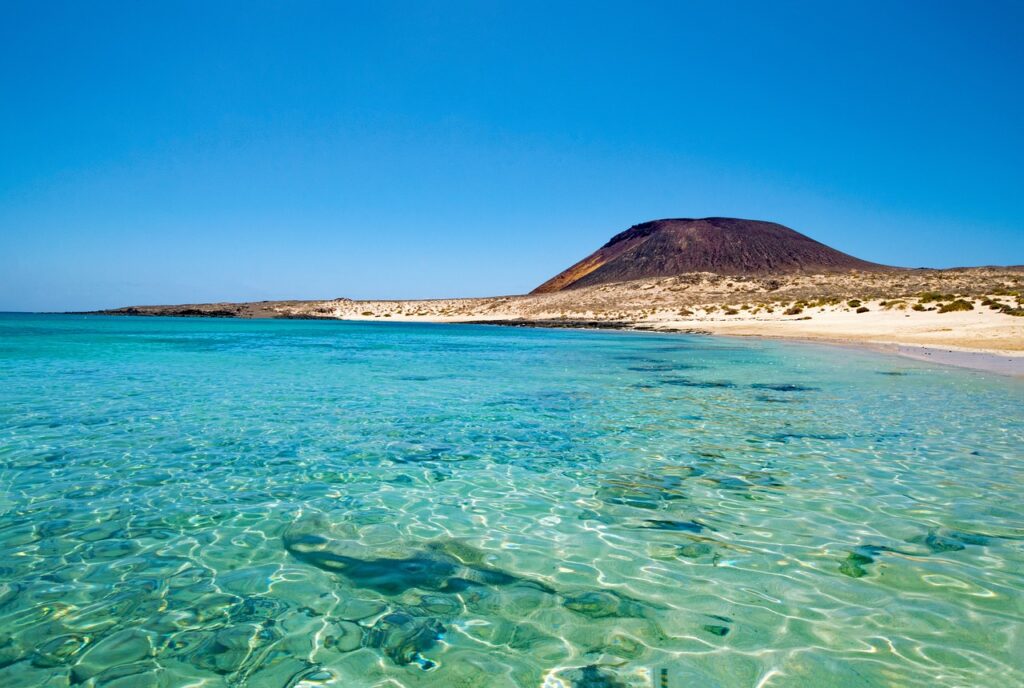
- Lobos Island Today: Nature Reserve, Lagoon, and Living Landscape
- Getting to Lobos Island: Every Option Available from Corralejo
- Ferry to Lobos Island – Glass Bottom Boat – Water Taxi – Catamaran Excursions – Jet Ski Safari – Dolphin Watching
- Practical Information: Planning Your Visit to Lobos Island
- Why Book Through Lobosislandtickets.com?
- The Last Word: Why Lobos Island Matters
What Is Lobos Island? An Introduction
Lobos Island — officially Isla de Lobos — is a tiny uninhabited nature reserve located just 3 kilometres north of Corralejo, on the northern tip of Fuerteventura in Spain’s Canary Islands. Separated from Fuerteventura by the Bocaina Strait and separated from Lanzarote by just 11 kilometres of open Atlantic, Lobos sits at a geographical crossroads that has made it strategically significant, ecologically remarkable, and historically fascinating across thousands of years of human history.
Today it is classified as a Natural Park (Parque Natural de Isla de Lobos), protecting its volcanic landscapes, migratory birds, endemic flora, and one of the finest natural lagoons in the Canary Islands. Visitor numbers are limited — a maximum of 400 people are permitted on the island at any one time — which means getting there early, and booking in advance, is essential.
Born of Fire: The Volcanic Formation of Lobos Island
To understand Lobos, you must first understand the forces that created it. The island is entirely volcanic in origin, a product of the same geological hotspot that thrust the entire Canary archipelago above the surface of the Atlantic Ocean millions of years ago.
The most visible evidence of this fiery birth is La Caldera de Lobos, a Strombolian volcanic cone that dominates the interior of the island. Standing approximately 127 metres above sea level, La Caldera is a classic example of a cinder cone volcano, built up from successive eruptions of basaltic lava and pyroclastic fragments. Geologists estimate the volcano’s last period of major activity occurred around 3,000 years ago, though the island itself began forming far earlier, during the Pliocene epoch.
The landscape that volcanic activity left behind is otherworldly. Vast fields of black basalt lava flows (malpaís) stretch across much of the island, their jagged surfaces colonised by hardy succulents, sea spurge, and the occasional nesting seabird. Ancient lava tubes and hardened magma formations create an almost lunar terrain that contrasts dramatically with the brilliant whites and turquoises of the lagoon on the island’s southern shore.
The waters surrounding Lobos were shaped by the same volcanic processes. The Bocaina Strait is geologically young, a shallow channel of exceptional clarity and biodiversity that exists because the volcanic platform connecting Fuerteventura and Lobos never quite breached the ocean surface — leaving a natural aquarium teeming with marine life between the two landmasses.
This is why the waters around Lobos are among the most celebrated for snorkelling, diving, and the glass-bottomed submarine excursions that depart from Corralejo daily.
The Geography of Lobos Island
Despite its small size, Lobos Island contains a surprisingly diverse range of geographical features, each worth exploring on foot.
Area: 4.58 km² Highest point: La Caldera (127 m) Coastline: Approximately 12 km Location: 28°44’N, 13°49’W
The island is divided broadly into three zones. The southern lagoon zone, centred on Playa de la Caleta, is the arrival point for most visitors. This sheltered bay and its surrounding lagoon offer calm, shallow, impossibly clear water, framed by golden sand and low rocky outcrops — ideal for swimming and snorkelling. The lagoon’s protected status means the marine ecosystem here is exceptionally healthy, with abundant fish, sea urchins, and the occasional octopus visible without even submerging your head.
Moving inland and northward, the terrain transitions into the volcanic malpaís — the raw, dramatic lava fields that give Lobos its untamed character. A network of marked trails crosses this zone, leading walkers up to the rim of La Caldera, where on a clear day the views stretch from the white cube architecture of Corralejo on Fuerteventura to the rust-red cliffs of southern Lanzarote.
On the island’s northern tip stands the Faro Punta Martiño, the historic lighthouse whose story is inseparable from Lobos’s human history. Around it, the remnants of what was once a small permanent settlement — a scattering of ruins and the old lighthouse keeper’s quarters — hint at the island’s more inhabited past.
Lobos Island and the Roman Empire: Ancient History
Long before the Spanish conquest, before the Portuguese explorers, and before the pirates who would later stalk these waters, Lobos Island was known to the ancient world. Archaeological evidence confirms that Roman-era sailors visited — and possibly settled on — Lobos Island during the first century BC and the first centuries AD.
The Romans, who referred to the Canary Islands collectively as the Insulae Fortunatae (the Fortunate Isles), were drawn to the archipelago for a specific and commercially valuable purpose: the production of purple dye. The deep, permanent purple known as Tyrian purple or purpura was among the most precious commodities in the ancient world, prized across the Mediterranean for dyeing the togas and robes of emperors, senators, and aristocrats. Its production required enormous quantities of murex sea snails (Stramonita haemastoma), whose crushed glands yielded the dye.
Archaeological excavations on Lobos Island have uncovered substantial evidence of Roman-era purple dye workshops (cetariae), including middens of crushed murex shells, the remnants of processing vats, and ceramic fragments consistent with Roman occupation. The island’s shallow waters and rocky shores would have provided an ideal — and abundantly stocked — hunting ground for these molluscs.
This finding places Lobos Island within a broader network of Roman commercial activity across the eastern Atlantic that stretched as far as the coast of West Africa. The island was not merely a curiosity on the edge of the known world; it was a productive outpost of empire, generating a commodity that coloured the clothing of Rome’s most powerful citizens.
For the casual visitor stepping off the ferry today, it is a remarkable thought: those same sun-bleached rocks that frame the lagoon were once the site of an imperial industry.
Pirates, Portuguese Navigators, and the Past Five Centuries
With the collapse of the Roman Empire, the Fortunate Isles faded from the consciousness of mainland Europe for centuries, known only to Arab geographers and the occasional Genoese or Mallorcan navigator. It was not until the 14th and 15th centuries that European powers began to take serious interest in the Canaries once more.
Portuguese navigators were among the earliest modern Europeans to document the island. Sailing southward along the African coast during the great Age of Exploration, Portuguese captains used the Canary Islands as waypoints, and Lobos — with its distinctive volcanic cone visible from miles offshore — served as a useful landmark in the Bocaina Strait. Portuguese cartographers noted the island in early charts, contributing to the gradual mapping of the eastern Atlantic that would ultimately enable the voyages of Columbus and da Gama.
Spain eventually consolidated control over the Canary Islands through the conquest of Fuerteventura in the early 15th century under the Norman nobleman Jean de Béthencourt, and Lobos fell within the Spanish colonial sphere. But Spanish sovereignty did not mean security. The narrow strait between Fuerteventura, Lobos, and Lanzarote became one of the most dangerous passages in the eastern Atlantic during the 16th, 17th, and 18th centuries, haunted by Berber pirates (corsairs) operating from the North African coast.
These raiders — known in Spanish as moros — launched devastating attacks on coastal settlements across Fuerteventura and Lanzarote for generations. Lobos Island, lying directly in the Bocaina Strait, was both a potential hiding place for corsair vessels and a target for raids. The strategic importance of controlling the strait — and the vulnerability of any permanent population on the island — shaped its human history profoundly. For long stretches of the early modern period, Lobos remained effectively uninhabited not by choice, but by necessity; any small community there was simply too exposed to seaborne attack to survive.
By the 18th and 19th centuries, with piracy in the region reduced but not eliminated, the island was used primarily for seasonal fishing by communities from Corralejo on Fuerteventura and from the villages of southern Lanzarote. Fishermen would camp on the island during the fishing season, making use of the lagoon’s abundant marine resources, before returning to the mainland.
The People of Lobos: Lighthouse Keepers and the Last Inhabitants
The 20th century brought Lobos Island its most intimate and poignant chapter of human habitation — one that has become part of local legend on both Fuerteventura and Lanzarote.
The construction of the Faro Punta Martiño (Lobos Lighthouse) in 1865 marked the beginning of a permanent human presence on the island that would last for more than a century. The lighthouse was built to guide vessels through the treacherous Bocaina Strait and to warn of the shallow volcanic reefs that punctuate the channel. Its keepers and their families became, in effect, the permanent population of Lobos Island.
The most celebrated of these lighthouse keepers was Antoñito el Farero — Antonio Hernández Páez, to give him his full name — whose memory is still cherished by the people of Corralejo and Fuerteventura. Born in 1913 on the island of La Graciosa, just north of Lanzarote, Antoñito came from a family with deep maritime roots: his grandparents were among the earliest permanent settlers of La Graciosa, drawn there by the fishing salting industries of the late 19th century. He learned the craft of lighthouse keeping on the nearby islet of Alegranza, and in 1936 — following the death of the assistant keeper on Lobos — he was appointed to the Faro Punta Martiño and crossed the Bocaina Strait with his family to begin what would become more than three decades of island life.
Antoñito lived on Lobos with his wife and eight children, two of whom were born in the lighthouse itself. He was doctor, mechanic, fisherman, cook, and host all at once — when medical emergencies occurred, he improvised; when visitors arrived, he fed them the fish he had caught that morning, turning the lighthouse house into an impromptu restaurant famous for its yellow rice, fresh seafood, and the warmth of its host. His burro Fermín, who had allegedly learned to open beer bottles with his teeth, became something of a celebrity in his own right. Antoñito’s fame spread far beyond the Canaries: in 1978 he was invited to appear on La Clave, the legendary TVE debate programme hosted by José Luis Balbín, where the episode’s theme — “All Solitude” — was clearly chosen with him in mind. All of Spain met Antoñito el Farero that June evening.
He served as keeper until 1968, when the lighthouse was automated and Lobos Island’s era of permanent human habitation effectively came to an end. He passed away in 2001, honoured in his final years with the Silver Medal of the Canary Islands Tourism Awards. As a tribute to this singular figure, one of the primary schools in Corralejo bears his name: the CEIP Antoñito El Farero, which opened in 2007 and today educates hundreds of children from nearly thirty different nationalities — a fitting legacy for a man who lived his entire working life on an island smaller than many of their school playgrounds. A street in Corralejo also carries his name.
The restaurant that now operates near the landing jetty — El Puertito — is run by Antoñito’s descendants, and the menu of fresh fish and seafood rice that made him legendary lives on.
But Antoñito was not the only remarkable person to emerge from the shadow of the Faro Punta Martiño. Decades before him, the lighthouse was home to another family whose child would go on to become one of the most celebrated literary voices of the 20th century in Latin America. Josefina Plá — full name María Josefina Teodora Plá Guerra Galvany — was born on Lobos Island in 1903, the daughter of Leopoldo Plá, a lighthouse keeper who had been posted to the Faro Punta Martiño. She spent her earliest years on the island before her family departed for mainland Spain, and ultimately made her way to Paraguay in 1927, where she became a poet, playwright, essayist, journalist, ceramicist, and human rights advocate of extraordinary breadth and influence. She was nominated multiple times for the Premio Cervantes, received Spain’s Gold Medal for Fine Arts in 1995, and was awarded an honorary doctorate by the University of Asunción. She died in Paraguay in 1999, having spent nearly a century enriching the culture of a country she adopted as her own.
Today, Josefina Plá is honoured on the island where she drew her first breath. Just a few steps from the landing jetty at El Puertito, visitors are greeted by a small bust of the writer gazing out towards the sea — one of the first things you see as you step off the ferry onto Lobos Island. At the Faro Punta Martiño itself, two bronze plaques commemorate her birth there, one bearing a relief of a seagull and lines from her own poetry. It is a quietly moving welcome to an island that, in its remote and wind-scoured way, shaped a remarkable human being.
The buildings of the old settlement — the lighthouse keeper’s quarters and ancillary structures — remain standing near the Faro Punta Martiño, visited today by the walkers who make the circuit of the island’s trail network.
Walking past these structures, particularly in the golden light of late afternoon, it is impossible not to feel the weight of all those years of human life — isolated, self-sufficient, profoundly connected to the sea and the volcanic landscape — played out on this tiny rock in the middle of the Atlantic.
The Origin of the Name: Monk Seals and a Lost Colony
No aspect of Lobos Island’s history is more evocative — or more melancholy — than the origin of its name.
Lobos is the Spanish word for wolves, but the island was not named after any land predator. The full historical name was Isla de los Lobos Marinos — Island of the Sea Wolves — where lobos marinos was the colloquial Spanish term for what we now know as the Mediterranean monk seal (Monachus monachus).
When European navigators first encountered the island in the 14th and 15th centuries, its beaches, rocky coves, and sheltered lagoon were home to a substantial colony of Mediterranean monk seals. These large, docile marine mammals — adults can reach 2.4 metres in length and weigh up to 320 kilograms — were once widespread across the Mediterranean, the Black Sea, and the eastern Atlantic coast as far south as West Africa. The Canary Islands represented the westernmost extent of their Atlantic range, and the remote, undisturbed beaches of islands like Lobos provided ideal haul-out and pupping sites.
The monk seals were drawn to Lobos for the same reasons that made it attractive to Roman dye-makers and medieval fishermen: the extraordinary richness of the surrounding waters and the island’s relative isolation from human disturbance. They used the lagoon beaches for resting and breeding, and the deep-water channels of the Bocaina Strait for hunting fish and octopus.
Their fate followed a tragically familiar pattern. As human activity around the Canary Islands intensified from the 15th century onward — fishing, hunting, and simply the increased presence of boats and people — the monk seal colony on Lobos came under pressure. The seals were hunted for their meat, their oil, and their pelts. Fishermen, competing for the same fish stocks, regarded them as rivals and killed them. Disturbance at breeding sites caused pup mortality. By the 18th century, the monk seals had disappeared entirely from Lobos Island, and by the early 20th century they had been virtually exterminated across the entire Canary Islands.
Today, the Mediterranean monk seal is one of the most endangered marine mammals on Earth, with fewer than 800 individuals surviving, primarily in small colonies off the coast of Mauritania, in the Greek Aegean, and around Madeira’s Desertas Islands. Periodic reports surface of lone individuals spotted in Canarian waters, sparking hope that the species might one day naturally recolonise the islands it once called home — including the lagoon beaches of Lobos, whose warm and fish-rich waters remain as welcoming as they were when the first seals hauled out here thousands of years ago.
The name survives as a monument to their presence. Every time you board a ferry and hear someone say “Lobos Island,” you are, without knowing it, invoking the memory of the sea wolves that once defined this place.
Catamaran Excursions
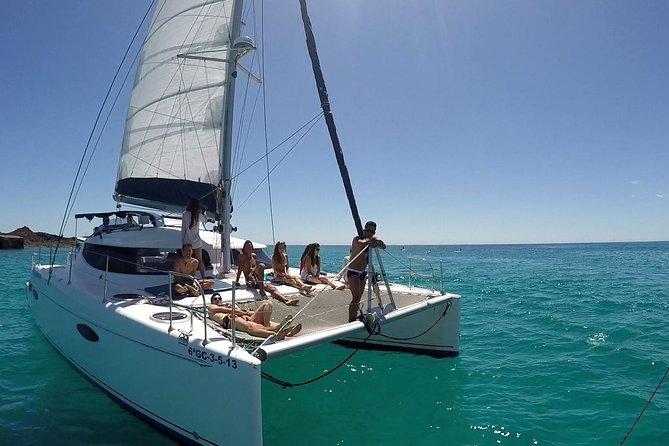
Enjoy a relaxing cruise complete with a delicious meal and refreshing drinks served on board. Snorkeling & paddle board included.
Book Now
Dolphin & Whale Watching
Spot dolphins in their natural habitat and enjoy stunning ocean views—an unforgettable experience for all ages.
Book Now
Dune Buggy Safary
Discover the wild side of Fuerteventura on a dune buggy safari through the island’s most scenic and rugged terrain.
Book Now
Lanzarote Tours from Corralejo
Lanzarote offers a captivating blend of natural beauty and cultural experiences, making it an ideal destination for exploration.
Book Now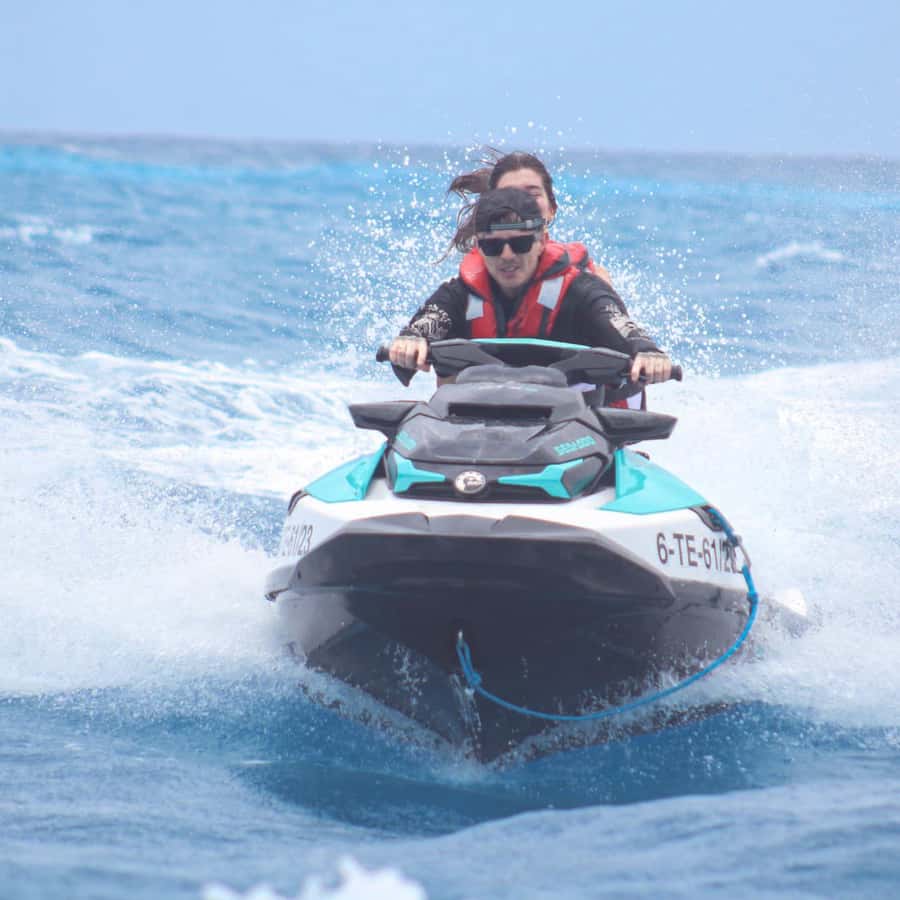
Jet Ski Safari Corralejo
Book the best Jet Ski Safari in Fuerteventura! Experience a jet-ski ride from Corralejo to Lobos Island — enjoy coastal views, crystal water, and the protected landscapes of Lobos.
Book NowLobos Island Today: Nature Reserve, Lagoon, and Living Landscape
Declared a Natural Park in 1982, Lobos Island today is protected under both Spanish national law and European Union environmental directives. The island forms part of the Red Natura 2000 network of protected habitats, recognising the exceptional ecological value of both the island itself and the surrounding marine environment.
Visitors must arrive by ferry or excursion vessel and follow marked trails. Camping, fires, collecting plants or animals, and leaving marked paths are all prohibited. The result is an island that feels, despite its proximity to one of Fuerteventura’s busiest tourist resorts, genuinely wild.
The Lagoon
The southern lagoon of Lobos — centred on Playa de la Caleta and the nearby Playa de la Laja — is the island’s most iconic feature and the first thing visitors encounter on arrival. This natural bay, sheltered by low volcanic headlands, offers water of extraordinary clarity and colour: a gradient from pale mint near the beach to deep cobalt in the channel, with visibility that can exceed 20 metres on calm days.
The lagoon’s seabed is a mosaic of white sand, volcanic rock, and seagrass meadow that supports an abundant community of marine life. Trumpetfish, parrotfish, wrasse, sea bream, moray eels, and octopus are commonly observed by snorkellers without any specialist equipment. The sandy bottom around the lagoon entrance is a reliable spot for angel sharks (Squatina squatina), a critically endangered species that has found refuge in Canarian waters.
For families with children, the lagoon’s sheltered, shallow inner sections offer safe, warm bathing that rivals anything in the Canary Islands.
La Caldera Volcano
The walking trail to La Caldera is the island’s signature inland experience. A well-marked path leads from the beach area northward across the volcanic malpaís, climbing steadily to the rim of the cinder cone. The circuit takes approximately 2 to 3 hours at a relaxed pace and covers some of the most dramatic volcanic terrain in the Canaries.
From the crater rim, the views are sensational in every direction: south across the Bocaina Strait to the dunes and white town of Corralejo; north to the red cliffs and salt flats of southern Lanzarote; east to the stark mountains of Fuerteventura’s interior; west to the open Atlantic, where on clear days you may see the silhouette of Gran Canaria on the horizon.
The crater interior is partially vegetated, its sheltered microclimate supporting plant species found nowhere else on the island. Eleonora’s falcons, Barbary falcons, Cory’s shearwaters, and osprey nest on and around the volcano, making it one of the best birdwatching locations in the Canary Islands.
Antoñito el Farero: The Only Restaurant on Lobos Island
One of the most delightful surprises Lobos Island offers is the existence of Antoñito el Farero, a small and legendary restaurant operating from a simple building near the landing area. In a place with no permanent inhabitants, no shops, and no infrastructure to speak of, El Puertito is an institution.
The menu is unsurprisingly focused on the sea: freshly caught fish of the day, grilled or baked; local prawns; goat’s cheese; papas arrugadas (the Canarian wrinkled potatoes with mojo sauce); and cold local beer served on a terrace with a view of the lagoon. The combination of extraordinary food, extraordinary setting, and the knowledge that you are eating in what is arguably the most remote restaurant in Spain, makes lunch at El Puertito one of those travel experiences that stays with you long after the trip is over.
Reservations are not taken. Arrive early or risk disappointment — the restaurant operates only during visitor hours and closes when the last ferry returns to Corralejo.
Getting to Lobos Island: Every Option Available from Corralejo
This is where planning matters. The combination of limited visitor numbers and high demand means that booking your transport to Lobos Island in advance is essential, particularly during the peak summer months of July and August and during Semana Santa (Easter week).
Lobosislandtickets.com is your one-stop source for every way to reach and explore Lobos Island, offering real-time availability, instant booking confirmation, and competitive pricing across all the options below.
🚢 Ferry to Lobos Island from Corralejo
The regular passenger ferry is the most popular and most affordable way to reach Lobos Island. Operating from Corralejo harbour, the crossing takes approximately 15 minutes across the Bocaina Strait — a short, scenic journey that on most days is perfectly smooth, with views of both Fuerteventura and Lanzarote throughout.
Ferries run multiple times daily from early morning, allowing visitors to choose their own departure and return times and spend as long as they wish on the island (subject to the last ferry schedule). A standard return ticket gives you full freedom to explore the lagoon, walk to La Caldera, visit El Puertito, and simply sit in silence on one of the most beautiful pieces of volcanic rock in the Atlantic.
This is the ideal option for:
- Independent travellers who want flexibility
- Families with children who prefer a simple, direct crossing
- Walkers planning the full island circuit
- Anyone on a budget who wants to experience Lobos at their own pace
🔭 Celia Cruz Visión Submarina — Glass-Bottom Boat Experience
For visitors who want to experience the extraordinary underwater world of the Bocaina Strait without getting wet, the Celia Cruz Visión Submarina is one of the most popular excursions departing from Corralejo.
The Celia Cruz is a glass-bottom boat equipped with large underwater viewing windows set into the hull, allowing passengers to observe the marine life below — fish shoals, rays, sea beds, and on lucky days larger species — as the vessel crosses the strait and circles the waters around Lobos Island.
This excursion is particularly popular with families travelling with young children, older visitors, and anyone who simply appreciates the magic of seeing beneath the ocean surface without needing to dive. The commentary provided on board adds educational depth to the visual experience.
The views above the waterline are equally spectacular, with the volcanic coastline of Lobos Island seen from the water offering a perspective unavailable to those arriving by land.
⛵ Water Taxi to Lobos Island
For a more flexible and personalised crossing, the water taxi service offers a private or small-group alternative to the scheduled public ferry. Water taxis depart from Corralejo on request, allowing you to set your own departure time and, to some extent, your own schedule.
This option suits travellers who want a quieter, more intimate crossing without the crowds of the main ferry service, and is particularly popular with couples, small families, and those who want to arrive on the island early in the morning before the main visitor rush.
Water taxis also offer greater flexibility around return times during summer, which can be a significant advantage if you’re planning to spend the full day on the island and want to time your return around sunset.
⛵ Catamaran Excursion to Lobos Island
For those who want to combine the journey to Lobos Island with an extended sailing experience, a catamaran excursion is the most luxurious and comprehensive option available. These half-day or full-day trips typically include:
- A sailing cruise through the Bocaina Strait on a comfortable catamaran
- Time anchored off Lobos Island for swimming and snorkelling from the boat
- Onboard snorkelling equipment, paddle board and/kayaks provided
- Food and drinks, often including a light lunch or buffet
- Dolphin watching opportunities in the strait (more on this below)
The catamaran experience is ideal for groups, couples looking for a romantic day on the water, and families who want to combine sailing, snorkelling, and sightseeing in a single outing. The boats are typically spacious, stable, and equipped with sunbathing areas, shade, and on-deck facilities.
Many visitors who have taken both the ferry and the catamaran excursion report that the catamaran trip feels like a fundamentally different — and more immersive — experience of the Lobos Island environment.
🐠 Jet Ski Safari to Lobos Island
For the adrenaline seekers among us, a jet ski safari from Corralejo to Lobos Island is one of the most exhilarating water-based experiences available anywhere in the Canary Islands.
Guided tours depart from Corralejo and navigate the Bocaina Strait by jet ski, with stops around the island to appreciate the volcanic coastline from the water. Crossing the same channel that Roman ships once crossed in search of purple dye — but doing so at speed, with the wind and spray in your face — is a genuinely memorable experience.
Jet ski safaris are typically guided in small groups for safety, with no prior experience required. The guides are local and highly knowledgeable about the waters, the coastline, and the best spots to pause and take in the volcanic landscape of the island.
This is the perfect activity for:
- Couples looking for an adventure together
- Groups of friends wanting something different
- Anyone who finds the standard ferry crossing a little boring
🐬 Dolphin Watching in the Bocaina Strait
The Bocaina Strait between Corralejo and Lobos Island is one of the most reliable locations for dolphin and whale watching in the entire Canary Islands — a region already famous for its exceptional cetacean diversity.
The deep, productive waters of the strait are a regular hunting ground for bottlenose dolphins (Tursiops truncatus) and common dolphins (Delphinus delphis), both of which are frequently encountered by boats crossing to Lobos. More occasional — but increasingly regular — sightings include pilot whales, sperm whales, and loggerhead sea turtles in the waters just north of the island.
Dedicated dolphin watching excursions from Corralejo are designed to maximise your chances of encounters, operating with experienced marine biologists or naturalist guides who can identify species, explain behaviour, and position the boat responsibly to minimise disturbance to the animals. Many excursions combine dolphin watching with the crossing to Lobos Island, making for an exceptionally rich day on the water.
The experience of watching a pod of wild dolphins bow-riding your boat in the shadow of Lobos Island’s volcanic cone is, by any measure, one of those travel moments you simply don’t forget.
Practical Information: Planning Your Visit to Lobos Island
When to Go
Lobos Island is accessible year-round, but the best months are April through June and September through November — warm enough to swim, clear enough to see the bottom of the lagoon, and quiet enough to avoid the peak-season crowds. July and August are the busiest months; book well in advance.
What to Bring
- Sun protection is non-negotiable: shade is scarce on the volcanic malpaís
- Plenty of water — there is no fresh water on the island and El Puertito has limited supplies
- Snorkelling gear — the lagoon rewards even basic mask-and-snorkel equipment
- Walking shoes for the La Caldera trail; flip-flops are not suitable for the volcanic terrain
- A hat and sunglasses — the Canarian sun at latitude 28°N is more powerful than it looks
Lobos Island Authorization
Every visitor should apply for a Lobos Island access permit issued by the Cabildo of Fuerteventura. The authorization is free and can be requested on the official website, www.lobospass.com.
Spaces on morning ferries often sell out during peak season, so booking in advance is strongly recommended.
The authorization must be requested directly by the traveller. Ferry companies and travel agencies are not involved in the authorization process, are not responsible for issuing permits, and are not affiliated with the government. Please do not confuse the ferry booking with the authorization requirement.
Getting There
Lobos Island is accessible only by boat from Corralejo, a 15-minute crossing. All options — ferry, water taxi, catamaran, and excursion boats — depart from Corralejo Harbour.
Why Book Through Lobosislandtickets.com?
Lobosislandtickets.com is the dedicated booking platform for Lobos Island experiences departing from Corralejo. Here’s why thousands of visitors choose to book with us:
- All options in one place — ferry tickets, glass-bottom boats, catamaran excursions, jet ski safaris, water taxis, and dolphin watching
- Real-time availability — see which departures are available on your dates
- Instant confirmation — receive your tickets immediately, no waiting
- Competitive pricing — we work directly with operators to offer the best rates
- Expert local knowledge — our team knows Lobos Island inside out and can help you choose the right experience
Don’t risk turning up at Corralejo harbour to find the day’s ferries are sold out. Book your Lobos Island trip now and guarantee your place on one of the Atlantic’s most extraordinary islands.
Browse all available trips and book your Lobos Island experience
The Last Word: Why Lobos Island Matters
There is a particular quality of silence on Lobos Island — not the absence of sound, but the presence of the right sounds. Wind off the Atlantic. The creak of the lighthouse structure. Seabirds calling above La Caldera. The sound of water over volcanic rock.
In an age when every corner of the Mediterranean has been thoroughly discovered and thoroughly overrun, Lobos Island remains, against all odds, genuinely special. The combination of strict visitor limits, robust protection, and the simple geographical fact that you can only reach it by boat means that it has never been entirely tamed by mass tourism. The volcanic landscape looks much as it did when the last lighthouse keeper’s family crossed to Fuerteventura and didn’t come back. The lagoon is as clear and wild as it was when the monk seals hunted here.
It is a place that rewards those who seek it out. Whether you arrive by ferry for a solo walk to the volcano, on a catamaran with the champagne cork flying somewhere over the Bocaina Strait, or jet-skiing across the same waters that once carried Roman merchant vessels, Lobos Island will give you something that most tourist destinations cannot: the genuine feeling of having found somewhere real.
Book your crossing. The sea wolves are waiting.
© LobosIslandTickets.com | Ferry tickets, excursions and experiences to Lobos Island from Corralejo, Fuerteventura
Keywords: Lobos Island ferry, ferry to Lobos Island Corralejo, Lobos Island tickets, excursion Lobos Island, catamaran Lobos Island, jet ski Lobos Island, dolphin watching Corralejo, glass bottom boat Corralejo, Isla de Lobos day trip, things to do Corralejo Fuerteventura
- Departure Checklist

Disclosure
We’ve carefully selected these options to help you plan the best possible trip. We hope you found this guide helpful and inspiring! Some of the links in this post are affiliate links, which means we may earn a small commission—at no extra cost to you—if you make a booking through them. Thanks for reading, and don’t forget to follow us for more travel inspiration and hidden gems around Europe and beyond.
